|
|
Home →
Survival →
Cordage
Swamp Milkweed Cordage
|
| Swamp Milkweed (Asclepias incarnata) grows in
generally damp or wet places. Common Milkweed (Asclepias syrtiaca)
also makes decent cordage, but it is nowhere near as strong as Swamp
Milkweed. In fact, the fibers from most milkweeds can be made into
cordage. Swamp Milkweed fibers are extremely tough. In fact, a
single fiber, about the thickness of a human hair, can actually cut into
your skin!
The best time to collect Swamp Milkweed for cordage is after the
plants have died in the fall. It is best if the outer skin of the stems
has even started to flake off a bit. Don't wait too late in the winter,
or the plant skin will have started to rot.
This page shows Swamp Milkweed in the various stages of growth, with
detailed photos, so that you can identify it in the summer. Then you can
go back in the late fall or winter to retrieve the fibers.
For more information about swamp Milkweed, see the
Ontario Wildflowers
website. |
| |
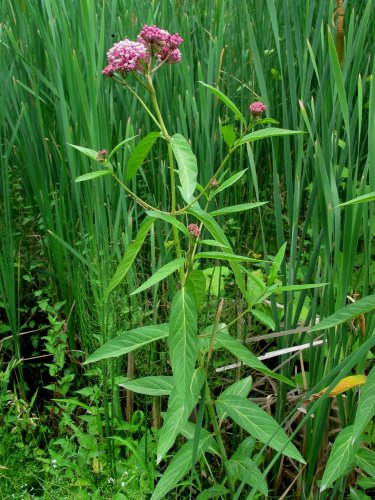 |
Here is the whole plant.
As you might have guessed, Swamp Milkweed likes growing in damp
or wet open areas. It is found in marshes, the edges of ponds, wet
fields.
Overall, this milkweed is slimmer and more "delicate"
than the familiar Common Milkweed (which also makes decent cordage,
but nowhere near as good as Swamp Milkweed!).
|
|
|
|
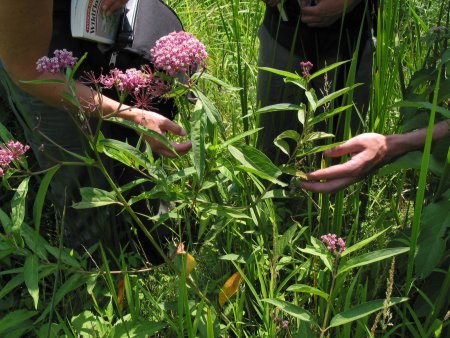 |
Another pic of the whole plant, in
flower. |
|
| |
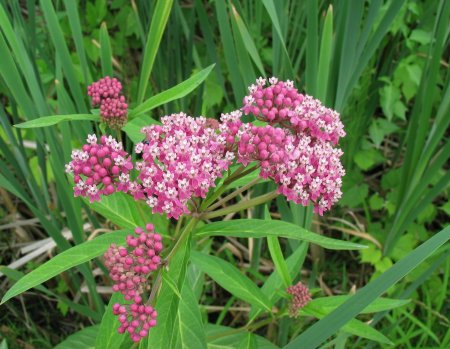 |
Close-up photo of the flowers. |
|
| |
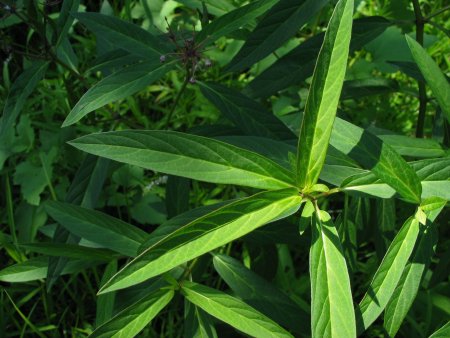 |
The leaves. Note that they are slimmer
than Common Milkweed leaves. |
|
| |
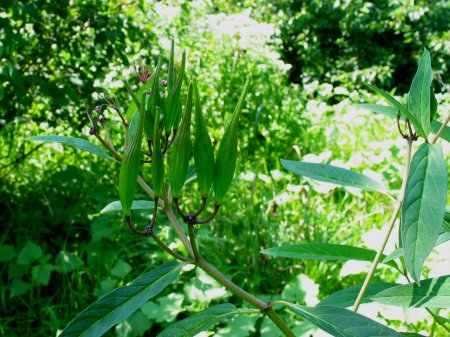 |
Here are the seed pods growing. |
|
| |
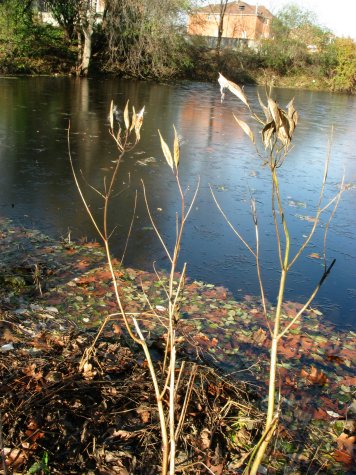 |
Here are a couple of plants in the fall,
after they have died and the pods have shed their fluffy seeds.
Note that these plants aren't quite ready for collecting the
fibers - they aren't dry enough yet.
|
|
| |
|
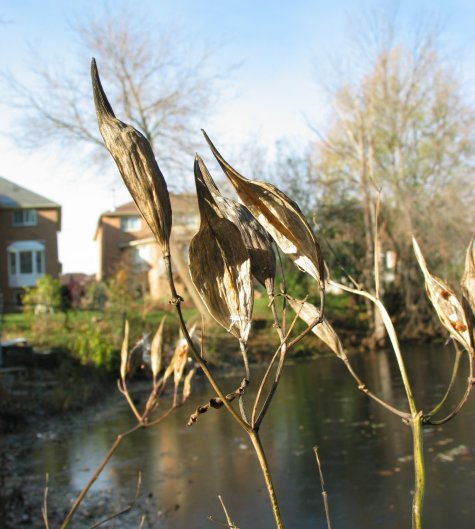
The dried-up seed pods in late fall |
|
|
| |
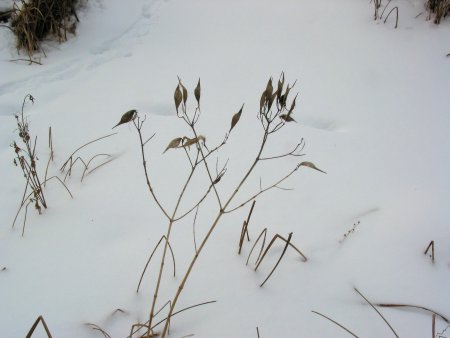 |
Swamp Milkweed in the snow. The fibers
are definitely ready to harvest now. |
|
| |
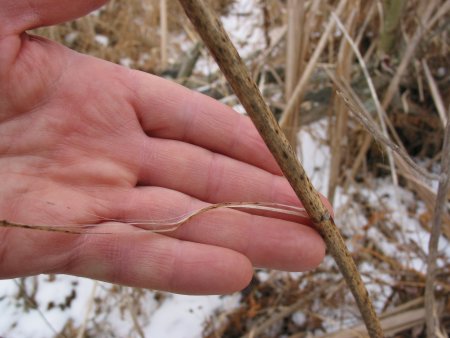 |
Stripping a narrow band of fibers off the plant. |
|
|
|
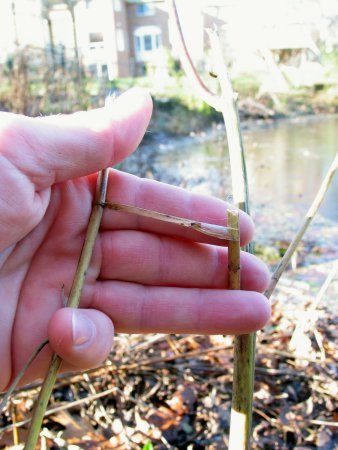 |
This photo shows a nice broad band of fibers being
pulled from the dead stem. |
|
| |
|
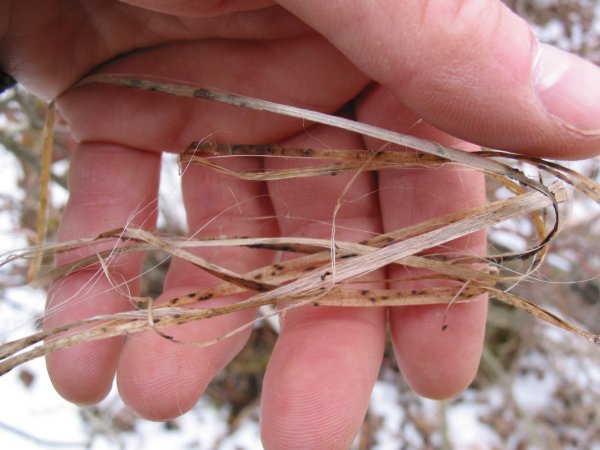
A nice bundle of fibers from one plant, harvested in
the winter
|
|
|
|
|
|
|


