|
|
Home →
Survival →
Cordage
Cordage
from Nettles
|
|
There are several species of nettles. This page only shows
Stinging Nettle (Urtica dioica) and Wood Nettle (Laportea
canadensis). For contrast, two similar plants are shown at
the bottom that are often confused with these species: Horse
Balm (Collinsonia canadensis) and False Nettle (Boehmeria
cylindrica). Nettles are also edible - See the
Edible Plants section
of this website.
PLEASE NOTE that Stinging Nettle is considered by some to be
an invasive alien plant. There are several varieties, hard to
tell apart. Some are alien to North America, and some are
considered native.
Cordage: Use the stem fibers
after the plant has died and dried out in the fall. They will
last through the winter, so you may still find a few standing
dead plants in the spring.
|
|
|
|
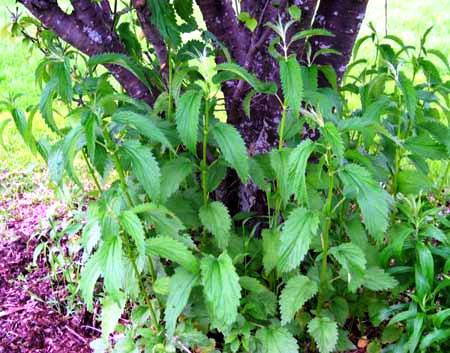
Stinging
Nettle
(Urtica dioica) |
|
|
|
 |
|
|
|
|
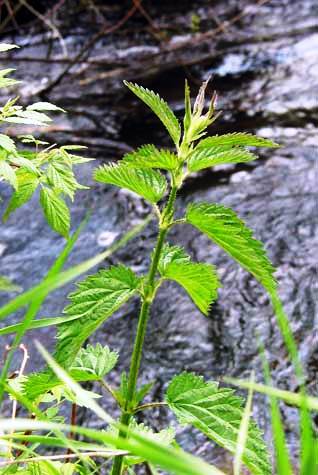
A typical Stinging Nettle plant in spring. Note the fine hairs along the stem. These are what sting when you touch
them. |
|
|
|
|
|
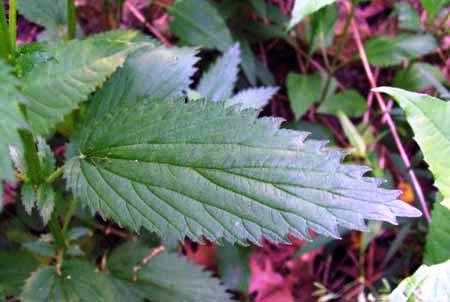
The leaf. |
|
|
|
|
|
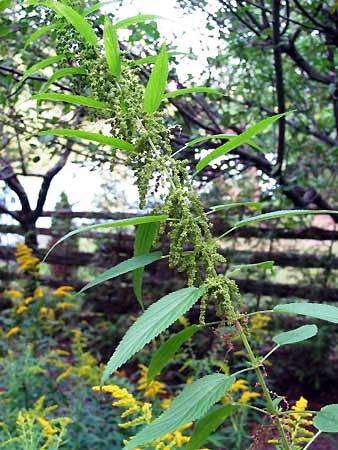
Flowers. These are very distinctive. |
|
|
|
|
|
Wood Nettle
(Laportea canadensis)
|
|
|
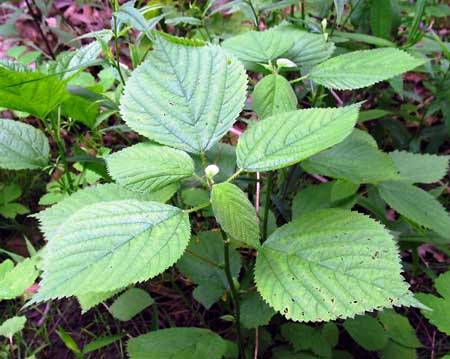 |
Wood Nettle also has stinging hairs along its
stem. But they don't seem to be as virulent as those of Stinging
Nettle. |
|
|
|
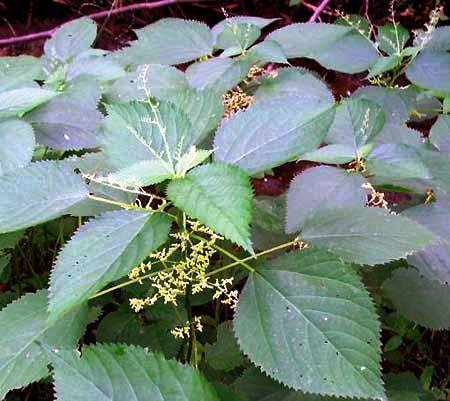 |
Wood Nettle flowers. Note that some flowers
are above the top leaves, and others are below. |
|
|
|
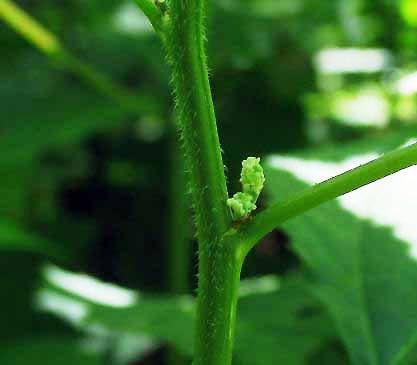 |
A close-up of the Wood
Nettle stem, showing the stinging hairs. Also shows
the start of a flower stalk (raceme). |
|
|
|
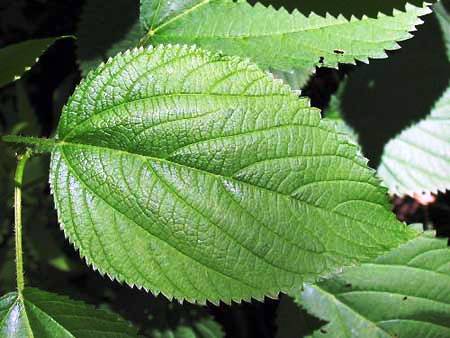 |
A Wood Nettle leaf. |
|
|
|
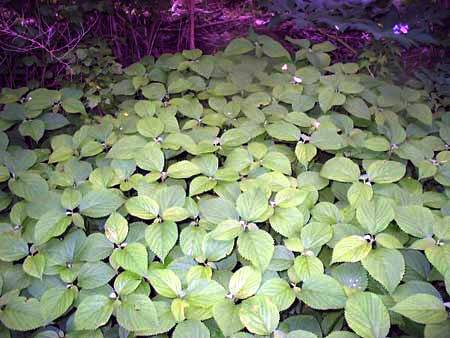 |
A nice patch of Wood Nettles |
|
|
|
|
|
|
|
|
|
|
|
False Nettle
(Boehmeria cylindrica) |
|
|
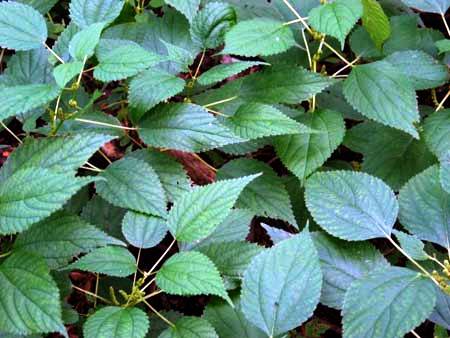 |
This plant is easily confused with Stinging
Nettle. However, it doesn't have any stinging hairs. |
|
|
|
|
|
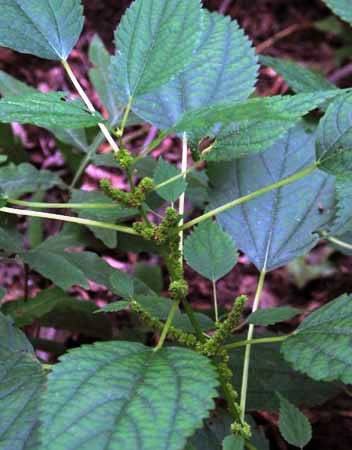
The flowers of False Nettle are different. They are
in tight clumps, instead of loosely spread out along arching thin stems like
Stinging Nettle. Note also the very long leave
stems. |
|
|
|
|
|
|
|
Horse Balm
(Collinsonia canadensis) |
|
|
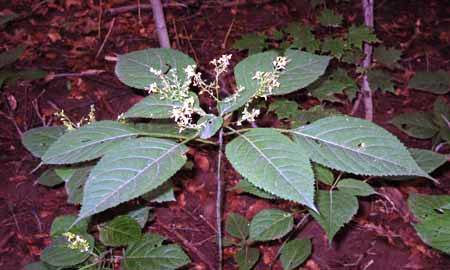 |
This plant is often misidentified as Wood Nettle. The main
differences are that Horse Balm has no stinging hairs, and the
flowers are all above the top leaves, and the flowers are very different
from those of Wood Nettle. Note also the long leaf stalks. |
|
|
|
|
|
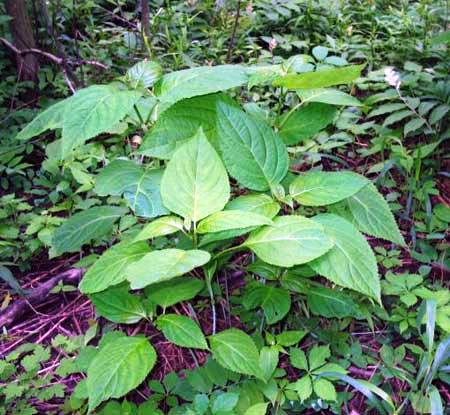
A few Horse Balm plants in the woods. These were in
a wet area. |
|
|
|
|
|
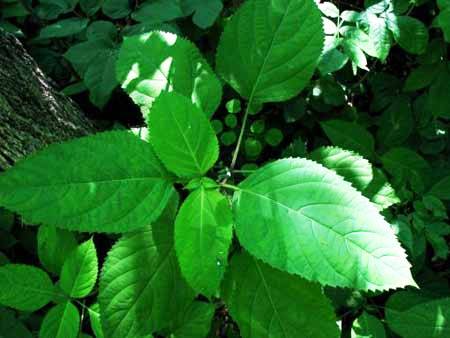
A top view. |
|
|
|
|
|
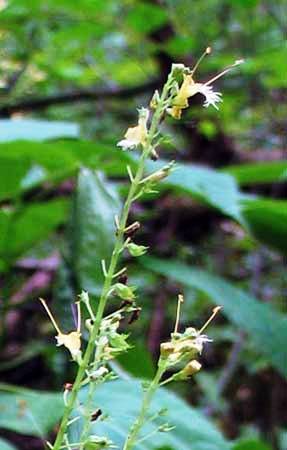
Horse Balm flowers - quite different from those of
Wood Nettle. |
|
|
|
|
|